
AI Knowledge Assistant
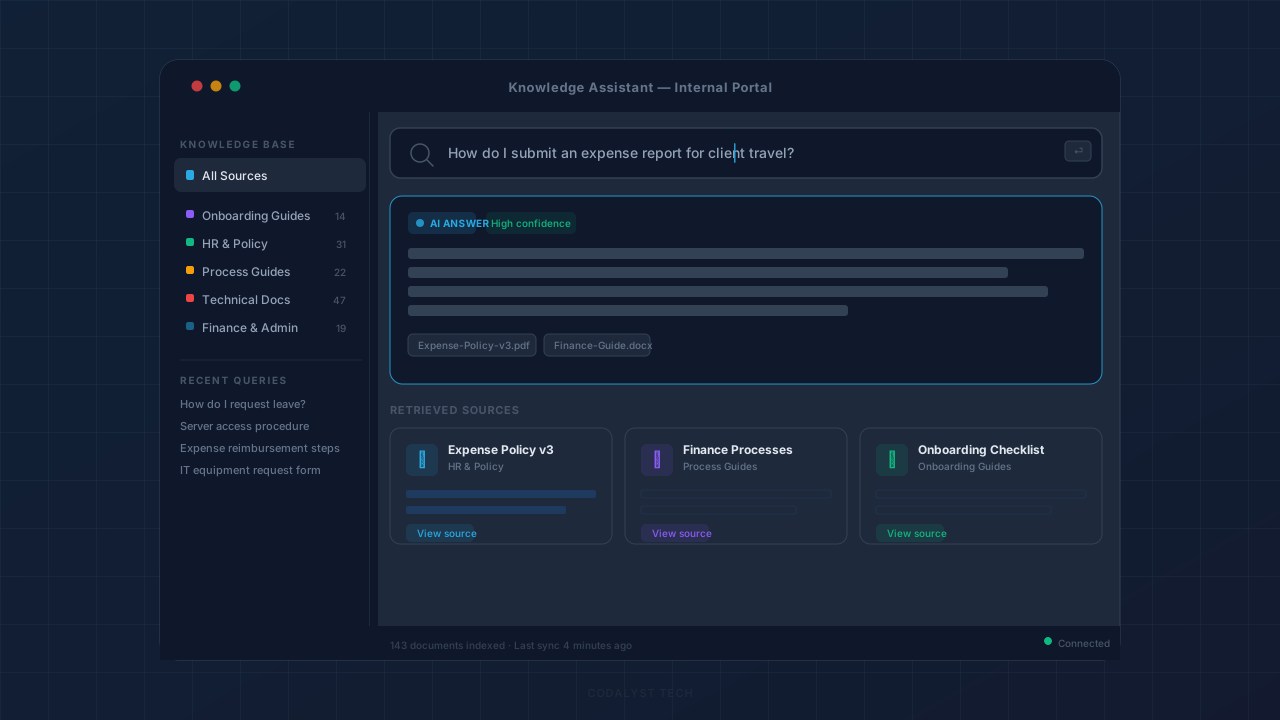
RAG-based internal AI assistant built as an enhancement layer over existing company documentation, helping employees find accurate answers in seconds without replacing any existing systems
Client
Enterprise Client (Confidential)
RAG + pgvector
Architecture
Read-only layer
Integration
On-premise
Data location
Role-aware
Access control
What needed solving
The client's internal knowledge was fragmented across shared drives, wikis, PDF guides, and legacy intranets. New employees relied on experienced colleagues to navigate this dispersed landscape, which slowed onboarding and pulled senior staff into fielding the same routine questions repeatedly. The documentation existed, but it was simply too scattered and difficult to search for employees to use effectively in their day-to-day work.
How we approached it
We built a lightweight AI knowledge assistant using retrieval-augmented generation (RAG). The assistant connects to the company's existing internal documentation as a read-only layer: no migration, no system replacement. Employees type natural language questions and receive precise, sourced answers drawn from internal guides, policies, and process documents. Every answer includes the source document, so employees can follow up directly on the original material.
How we built it
The core architecture is a RAG pipeline: a document ingestion process reads from the client's existing sources (PDFs, wiki exports, and shared drive documents) and indexes them into a vector store using semantic embeddings. At query time, the assistant identifies the most semantically relevant sections of internal documentation and passes them as context to the language model, which composes a grounded, factual answer. The model is not asked to generate from memory: it is anchored to retrieved content, which keeps responses accurate and auditable.
Integration was designed as a read-only layer on top of existing systems. No documents were moved, restructured, or migrated. The ingestion pipeline reads from the client's existing folder structure and document formats, converting content into indexed embeddings on a scheduled basis. This meant the client's existing editorial processes (how documents are created, approved, and updated) remained entirely unchanged. The assistant simply made that documentation more accessible.
Access control was a primary design consideration. The assistant respects the same permission boundaries that govern the underlying document systems. Employees only receive answers drawn from content they already have access to, preventing the assistant from inadvertently surfacing restricted information across roles. The system runs as an internal deployment, keeping all company knowledge within the client's own infrastructure at all times.
Key engineering decisions
The architectural choices that made the difference: cost savings, performance, and maintainability.
RAG Architecture
Retrieval-augmented generation grounds every AI response in content retrieved from the client's own documentation. The model is not asked to speculate or recall: it is anchored to relevant passages surfaced at query time, which keeps answers accurate and auditable.
Semantic Vector Search
Documents are indexed as semantic embeddings in a pgvector store. This allows the assistant to find conceptually relevant content even when the employee's question uses different terminology from the underlying document, a critical advantage over keyword search in internal knowledge bases.
Read-Only Integration Layer
The ingestion pipeline reads from existing document sources without modifying them. No migration, no restructuring, no change to how documents are authored or approved. The assistant runs alongside existing systems rather than replacing them.
Role-Aware Access Control
Query responses are scoped to documents the requesting employee is permitted to access, mirroring the permission boundaries already present in the source systems. This prevents the assistant from inadvertently surfacing restricted information across organisational boundaries.
Source Attribution
Every answer includes the source document and relevant section, so employees can verify the response and follow up directly on the original material. This builds trust in the assistant's answers and reinforces the habit of consulting official documentation rather than informal channels.
Internal Deployment
The full system runs within the client's own infrastructure. No company knowledge is transmitted to external services: the language model receives only the retrieved passage and the query, keeping the knowledge base private and within the client's control.
What we delivered
Employees can now find accurate answers to procedural questions in seconds, reducing onboarding friction and significantly cutting the volume of repetitive interruptions to experienced staff. The assistant made the client's existing documentation investment more valuable without requiring any changes to how that documentation is created or maintained.
Natural language interface connected to existing internal documentation, no search syntax required
RAG pipeline with semantic search across company guides, policies, and process documents
Read-only integration: no data migration, no system replacement, no change to existing workflows
Role-aware responses drawn only from documentation the querying employee already has access to
Source attribution on every answer, allowing employees to verify and read the original document
Internal deployment: all company knowledge stays within the client's own infrastructure
Technologies Used
Explore Further
Related services and work
Dig deeper into the services and capabilities behind this project, or see more of our client work.
More Work
Other products we've built
 Health & Wellness
Nutri Diet Hut
Dietitian-led nutrition practice website with nine specialist service pages, WhatsApp booking integration, and evidence-based positioning
View case study
 Commercial Services
AAP Commercial Cleaners
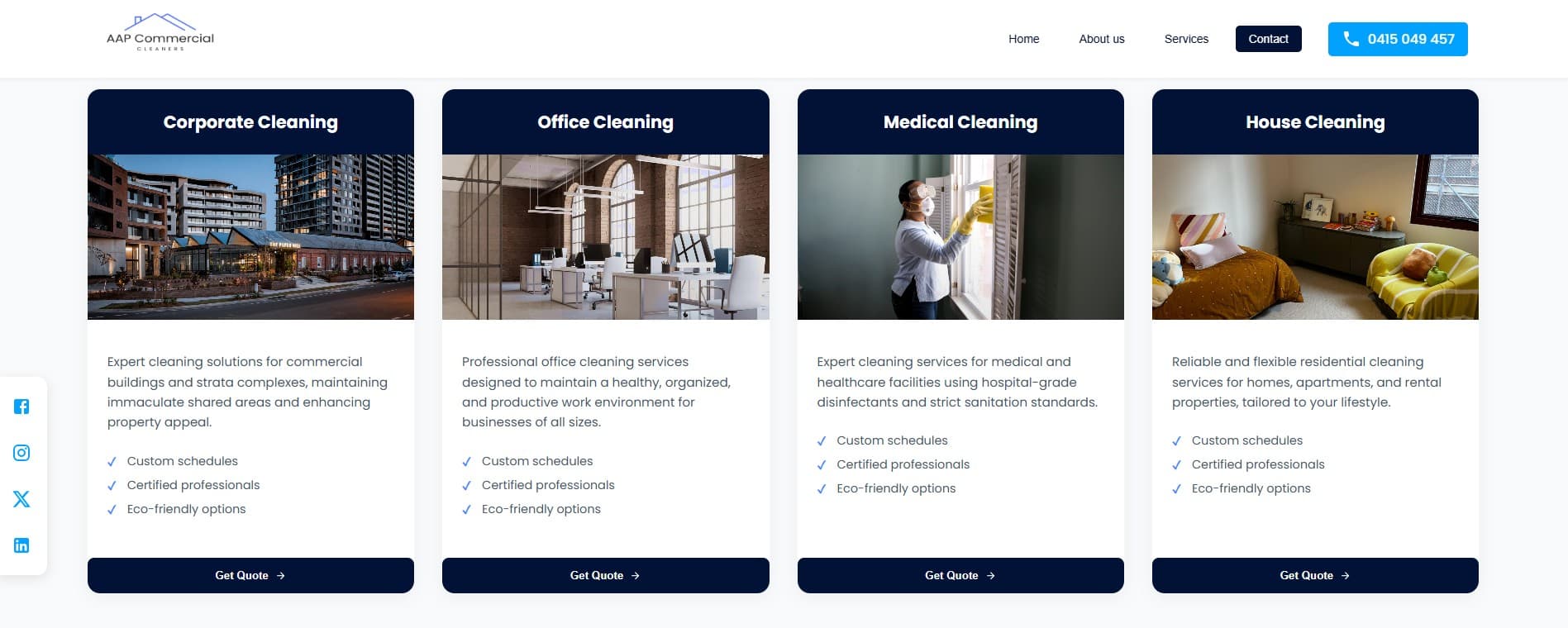
Full-service commercial cleaning website with trust-building social proof, multi-category service pages, and suburb-level coverage for south-west Sydney
View case study
 SaaS Product
Analytica
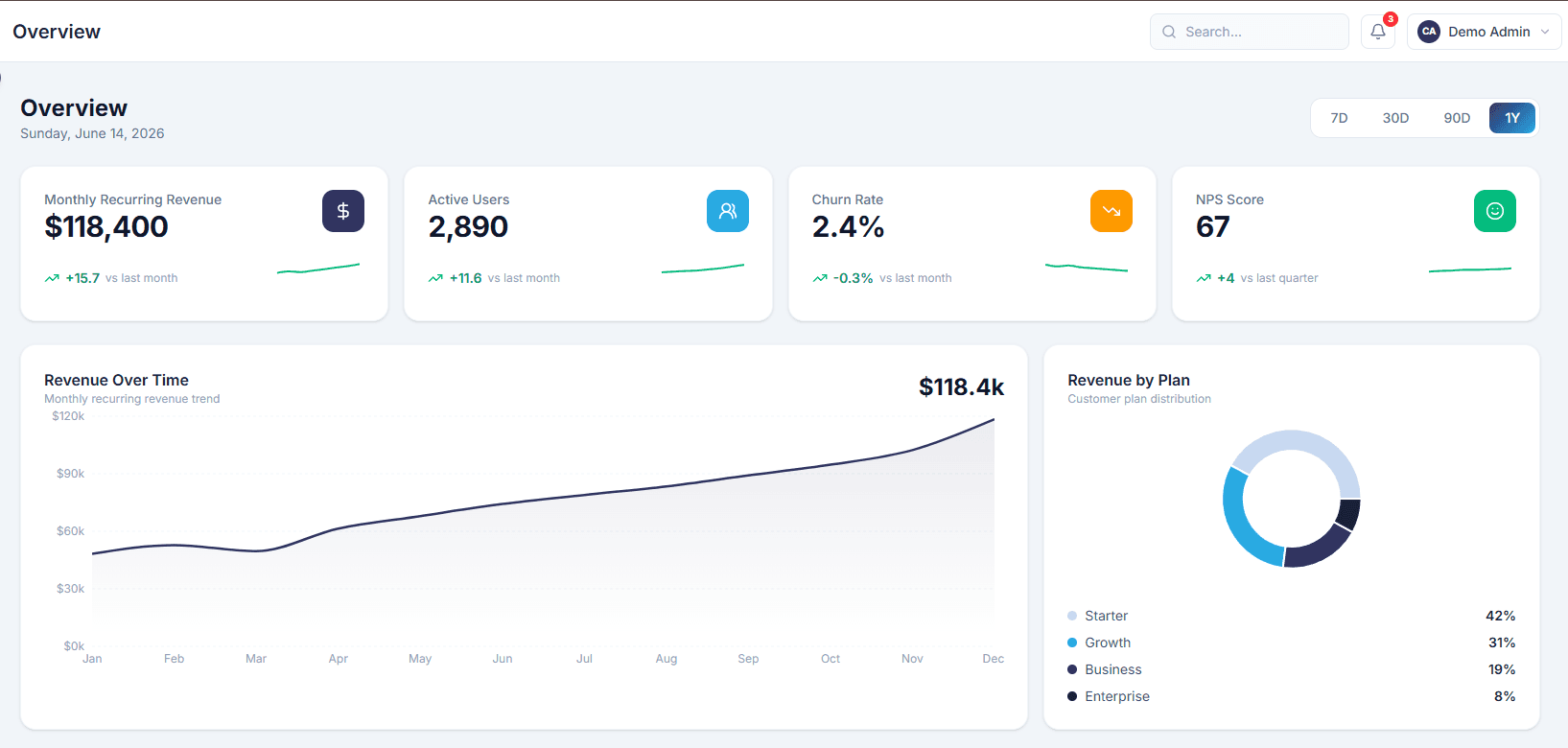
SaaS analytics dashboard with real-time metrics, revenue tracking, and user management
View case study
Want Something Like This?
We build production-quality products for clients worldwide: SaaS dashboards, POS systems, AI tools, and more.